Overcoming Adversity: Hubert Karol Susek
The theme this time is Challenge. I decided to write about my paternal grandfather Hubert Karol SUSEK (1926-2003). He overcame a few challenges early in his life. For example, he lived in Nazi-occupied Germany. He also faced the death of his father and forced labour. He left Poland behind and moved to the UK. He learned to speak English.
Hubert was born 1 October 1926 in Bogucice Katowice, Poland. Katowice is the capital of the Silesian Voivodeship which at that time was close to the German border.
He was the only child born to Henryk SUSEK and Klara Lucja WYGRABEK. The family were Roman Catholics. They lived in a flat in Katowice. They had an allotment where they kept rabbits, pigs, and pigeons.
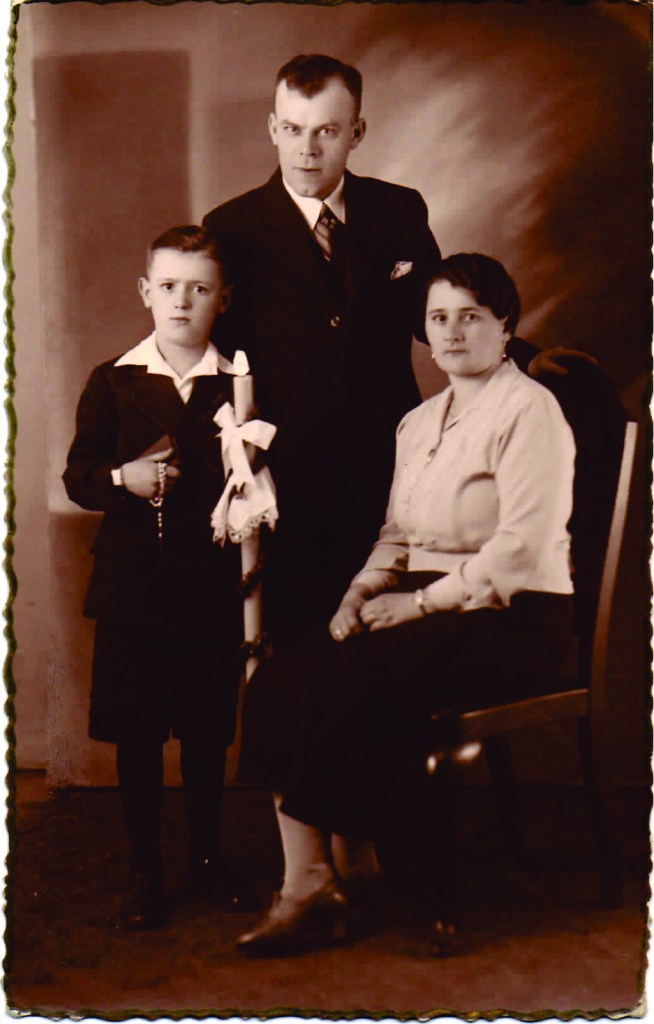
Hubert with his Parents (Henryk and Klara) after his Confirmation (Early 1930’s)
The invasion of Katowice began with the bombing of Katowice airport on 1 September 1939. On the 3 September the Germans were on the outskirts of the city. The army, local officials, police force and some of the local militia abandoned the city. Katowice’s defence was left to the boy and girl scouts and Silesian insurgents. The Nazis advanced on the city on 4 September and had control within hours. Retribution was swift, prisoners were rounded up and executed. The city was locked down and strict rules were implemented. Katowice became a prison.
Six weeks after Germany invaded on 1 September 1939, most of the schools were closed. Hubert was 13 when he had to finish school.
The Nazis banned speaking Polish in public conversations, fortunately the family were able to speak German. Being able to speak German enabled you to get better wages under the German regime. If you couldn’t speak German, you got Polish wages. Those wages weren’t very good.
Hubert got work as an apprentice clerk at Zaklady Hohenlohe Werkes. Zaklady Hohenlohe was a zinc smelter and coal mine. Hubert’s father worked at a zinc smelters, it is possible that this was at Zaklady Hohenlohe. In 1939 the mine and zinc smelter were taken over by Herman Goring.
In 1941 Hubert’s father Henryk died from lung disease. Back then health and safety was not was it is now, and breathing in all the poisonous fumes at the zinc smelter took its toll.
Hubert was deported to Germany into forced labour, where he worked on a farm. At some point during 1944 after hearing about the Allies invasion of France, he and a friend hatched a plan to leave the farm. The escaped hidden in the back of a hay cart. They managed to work their way through Europe encountering the Americans in France who believed them to be spies. The convinced the Americans they weren’t German spies and let them know there was a German ambush ahead. Finally, they were released. They were sent on their way. They made their way down to Italy to join the Free Polish Army.
Hubert joined the Polish army and was in the signals, and spent the rest of the war in Italy. At the end of the war, Hubert had the privilege of having a private audience with the Pope. This was a massive deal for him and one of the most important moments of his life.
The Soviets “liberated” Poland towards the end of 1944. The Yalta conference in early 1945 sealed Poland’s fate. Despite all of Poland’s contributions to the war its allies left Poland to the Soviets. This became known to the Poles as the Western betrayal. The Polish army kept on fighting alongside its allies, however, they knew they were not fighting for Polish freedom. After the war many Poles had a difficult decision to make, to return to Poland or not to return.
Not knowing if his mother or grandmother was still alive, Hubert finally made his decision and enlisted in the Polish Resettlement Corps on 16 December 1946.
For his resettlement, Hubert was happy train as a miner and to resettle in Canada, New Zealand or Australia. This was not to be.
Now in England and based at a resettlement camp in Warrick near Birmingham. Resettling in the UK came with its own challenges. Not speaking English was one. Prejudice from the British subjects was another, and the poles faced a lot of bitterness aimed towards them.
Hubert could not speak English and struggled learning the language. He found the easiest way to learn was to read comic books.
Hubert wrote to his mother, and discovered she had survived the war. She thought Hubert had died during the war, and was first wary of the letter. She did not believe it to be her son. So she wrote back and asked what she should do with his things. Not having many things, he told her to sell his ring and violin as she would need the money.
The Polish ex-servicemen would work locally. One of those jobs was loading trains to get supplies to the far east. They were expected to work for 12 hours with no breaks (including food, drink and toilet breaks). So they went on strike to protest the poor conditions they were expected to work in.
Anti-Polish sentiment was high in the UK, many people wanting the Poles to go back to Poland.
The resettlement camp moved up to Woodhall Spa near Lincoln. The local farmers would hire them to work their farms. One local farmer wouldn’t feed them or give them drinks, so they all decided to work slow, the farmer was not happy. The Poles felt like they were treated like dirt. A neighbouring farmer was ex-serviceman and had witnessed this. He went to the camp and asked to hire them to pick potatoes. He couldn’t afford to pay them. However, he made sure they were well fed and watered. They all worked hard and picked the potatoes in record time. He tried to give the workers something in way of a thankyou but they refused to accept it. Hubert felt that he was treated better by the Germans than by some of the English, who were supposed to be Allies.
In their down time the Polish servicemen would get the liberty bus into Sheffield for dances. This is where Hubert first met his beloved Iris HIBBERD (1929-2000).
By June 1947, Hubert had found a job in Sheffield. He was working as a bar straightener for Jonas and Colver on Stevenson Street.
Hubert asked Iris to marry him, and wished to marry in the Catholic church. The Catholic church in Sheffield wanted Iris to convert to Catholicism. Hubert told them he would not make Iris convert. The church issued an ultimatum. Iris must convert, or Hubert would be ex-communicated. He opted for ex-communication. He kept his faith even though he didn’t attend the catholic church. Iris and Hubert were married at the parish church of St Paul, Arbourthorne Sheffield, on 29 May 1948.
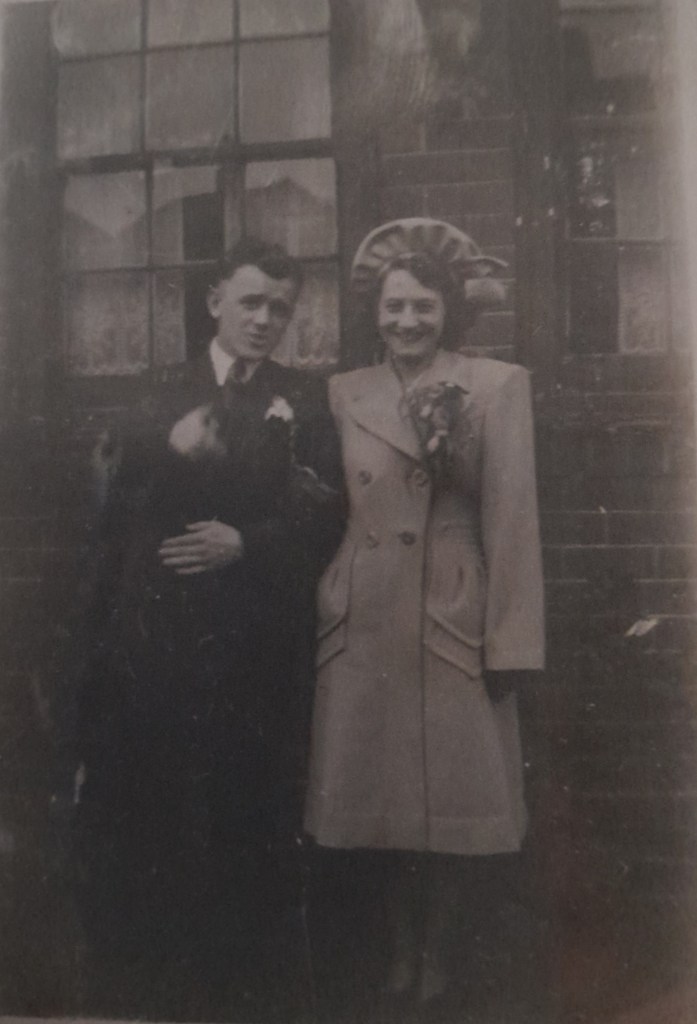
Hubert and Iris Wedding Day (29 May 1948)
Iris and Hubert had three children, twin daughters and a son.
Hubert was offered a role as an interpreter at work. He enquired whether the work boots were included like they were in his current role, they were not. With a young family to feed, he couldn’t justify taking the interpreter job and having to pay for the boots out of his own pocket.
Hubert got a job in the brick yard at the clay mine. And to supplement his wage was a bookies runner.
Right up until 1960 Hubert had to register as an alien at the police station.
In 1965 Hubert received news that his mother had died. His Aunt Marie was still alive in Poland. Hubert corresponded with her and sent her food parcels until the late 1990’s.
Hubert never liked to talk about the war or his life in Poland before the war. He would say he couldn’t remember, which is possible, his life as he knew it ended in 1939. Its also possible he didn’t want to remember. I am not sure when he lost his Polish accent. For as long as I can remember, he has always sounded like he was born and bred in Sheffield. He had a great sense of humour, and would give you the shirt off his back if he was able to.
Hubert and Iris, remained in Sheffield and spent their holidays touring the UK. He never returned to Poland.
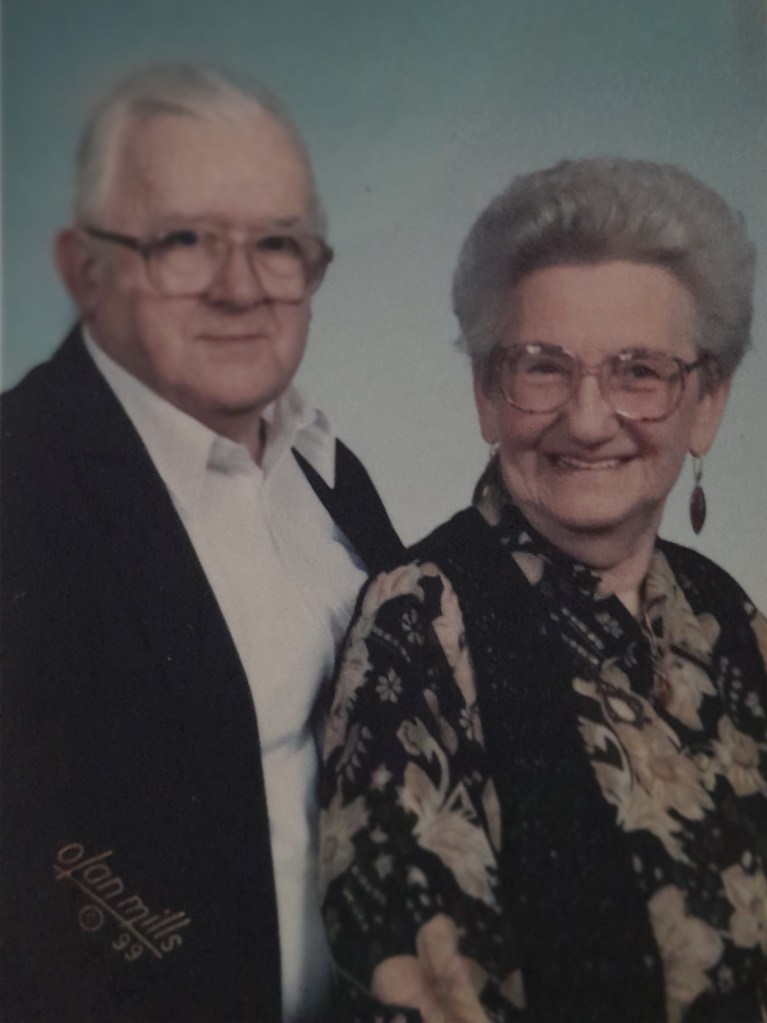
Iris died in October 2000 after a battle with leukemia. It was like a light turned off in Hubert, his whole world, his reason for living was gone. He suffered a stroke and never fully recovered. He died 6 December 2003.
Sources
- Hubert Susek, oral history.
- Photographs from Susek family collection.
- https://www.thesecondworldwar.org/invasion-of-poland/battle-of-the-border/defence-of-katowice
- https://pl.wikipedia.org/wiki/Zak%C5%82ady_Hohenlohego

 Relatively Family